Trotting 25.10.2026: V75 results, Øvrevoll gallop and equestrian sports today
Sunday morning after a big V75 Saturday is about more than reading the winner's list. It's about understanding why the races turned out the way they did: who gained position, who lost the start, who responded to the attacks, and which performances are better than the results row shows.
This morning report collects the threads from this weekend's horse racing today, with a look at trotting Norway, Swedish V75, Øvrevoll gallop and the international lines against Solvalla, Jägersro and Vincennes. Exact prizes, winning streaks and payouts must always be checked against the official results from Norsk Rikstoto, ATG and the tracks' own channels, but the analysis below points to the sporting factors that matter most towards Sunday's games and the next V75 rounds.

Saturday's V75 round provided answers, warnings and new questions
Saturday's spectacular V75 round on October 24 was primarily a reminder of how small the margins are when the fields are even and the course demands the right choices from both driver and trainer. In such rounds, the difference between a sure favorite and a costly favorite fall is often decided in the first 300 meters.
For players, the most important points were these:
The starting phase determined more than the strength on paper
Horses that came to the front or back of the leader early gained a clear advantage, especially in races where the pace was jerky.
Favorites without the right position became vulnerable
Several trusted horses had to do the job on the outside or attack from far behind. In autumn conditions, it can cost more than the row suggests.
Schoolless information gained great value
Barefoot balance, especially in front, can give better action and a faster finish. On wet or heavy terrain, the same grip can fail if the horse loses grip.
The riot battles showed who can withstand pressure
The best performances didn't necessarily come only from the winners. Horses that kept their pace after tough races on the outside should be noted early for the next start.
This is how V75 results should be read on Sunday morning
When reviewing V75 results, one should not stop at placings and odds. The sharpest post-analysis starts with the race as a whole.
Factor | Why it matters |
First 500 meters | Reveals whether the front-runner had too easy a race or had to exert a lot of effort |
Last 500 meters | Shows who had real final strength |
Position along the way | Back leader, dead end and third inside give completely different performance pictures |
Track profile | Heavy ground favors strength, fast track favors speed |
Balance and equipment | Shoes, barefoot, sulky and bridle can greatly change a horse's performance |
V75 payouts often become high when two conditions occur simultaneously: a big favorite falls, and an underrated horse has a perfect race. It is rarely just luck. Often the answer lies in the track, the choice of driver and the pace.
For bettors, Sunday's lesson is simple: Don't chase yesterday's winner. Instead, look for the horses that delivered strong runs without getting full payoff.
Sunday's race requires extra attention to the course and balance
The date of October 25th means autumn trotting. It gives different rules than summer tracks with top grip and fast finishes. In Norway and Sweden the weather can change quickly, and the track masters' work becomes part of the handicap.
At Bjerke racetrack and other Norwegian ovals, you should pay particular attention to:
if the surface of the track becomes loose after rain
whether the inner track stays the same throughout the day
whether the drivers seek out the track on the run-up
whether reported barefoot balance actually remains at the start
whether cold temperatures make some horses tighter in action
The same applies in Sweden, especially at tracks like Solvalla and Jägersro. Solvalla can often invite tactical races, while Jägersro with its profile often provides great value to quick-starting horses and jockeys who dare to drive offensively.
Schoolless information may be the key to V75 tips
Schoolless riding is not a pure plus. It must always be considered against the horse's action, the track's grip and the race layout.
A fast-starting warmblood horse that walks barefoot in front for the first time after a period of shoes may get the extra step needed to reach the lead. A coldblood horse with a lot of action, on the other hand, may be more vulnerable if the track is slippery. Therefore, shoeless information should be read in conjunction with warm-up impressions and trainer comments.
Good V75 tips this weekend shouldn't just point out the horse with the best record. They should explain why the horse gets its race.
Potential peels are often found in other ranks
The most interesting horses this time of year aren't necessarily the shiny outsiders. Look for horses like:
was heavily overshadowed by the favorite last time
has better tracks now than in recent starts
gets a more offensive driver
reported with lighter balance
meets a field without a clear pacesetter
In such races, a horse with an "average" row can be better than the market believes. This is especially true in coldblooded races, where form is often shown through trotting confidence, pressure in the last turn and the ability to respond when the attack comes.
Jockey form and trainer form point towards the next rounds
Form analysis in trotting is not just about winning percentage. A fit jockey makes the right decisions in pressured moments. A fit trainer sends out horses that warm up well, trot cleanly and can handle the race schedule.
Eirik Høitomt holds high value in open races
Eirik Høitomt is still one of the most interesting drivers to consider in even Norwegian fields. His strength lies in his eye for pace, positioning and the ability to give his horse an economical run. When he is behind a horse with enough speed to be in from the start, but who cannot handle too much rough work, the chance of a full-on victory increases.
In the V75 context, Høitomt is particularly dangerous when he can choose between defending the track or dropping to the right back. This makes him relevant with both favorites and horses in the middle class.
Åsbjørn Tengsareid and Dag-Sveinung Dalen must be considered tactically
Åsbjørn Tengsareid is often strong when the race requires timing. He can be extra relevant behind horses that need calm at the start and speed at the end. On heavy autumn tracks, saving meters is a big advantage, and Tengsareid is rarely the driver who wastes position unnecessarily.
Dag-Sveinung Dalen rides many different types of horses, which gives him a broad racing feel. When he gets a horse with the right back structure, he can be dangerous at higher odds. In betting, Dalen should rarely be overlooked just because the horse is not at the top of the betting lines.
Frode Hamre, Øystein Tjomsland and Bo Westergaard set the standard
Frode Hamre is associated with professional warmblood racing, high stable quality and horses that are often well prepared for major tasks. When the Hamre stable announces equipment changes or offensive tactics, it deserves extra attention. This is especially true on tracks where early position is crucial.
Øystein Tjomsland is a benchmark in the sport of coldbloods. His best coldbloods combine strength, speed and trotting confidence in a way that makes them difficult to beat when in good shape. In the coldblood elite, Tjomsland horses should always be considered with respect, even when they face tough additions or fast competitors.
Bo Westergaard has been an important Danish and Nordic player for several seasons, especially with warmbloods that can withstand tough racing conditions. When Westergaard sends horses to the Swedish or Norwegian V75, the journey itself is often a signal of ambition.
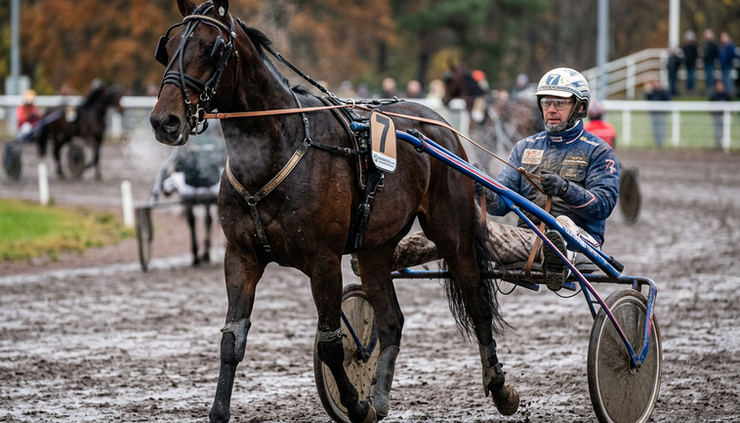
The cold-blooded and warm-blooded elite ahead of winter
Autumn often separates the strong from the weak. Coldbloods that keep up the action when the track gets heavier get a big plus towards the winter races. Warmbloods must show that they can handle both pace and positional battles.
In the cold-blooded elite, three characteristics are most important now:
Trotting safety through the turns
Gallop risk increases when the track becomes demanding.
Ability to withstand death
In small fields, the best may be pressured to do the work themselves.
Responsiveness on the run
Horses that find an extra gear when they have competition on the outside are worth their weight in gold.
In the warmblood elite, starting momentum is even more important. A horse with a track far behind the car must either be very fast to start or have a driver who finds position without using too much. Over 1,609 meters, tactics become extremely tough. Over middle distance and long distance, strength has more to say.
With the upcoming V75 rounds in Norway and Sweden, bettors should look for horses that show consistency over multiple starts, not just one strong performance. Autumn form can be genuine, but it can also be the result of perfect race preparation.
Øvrevoll gallop and the Norwegian gallop sport
Øvrevoll gallop is entering a phase where surface, distance choice and form curve matter a lot. The autumn at Øvrevoll can provide more demanding track conditions, and this often lifts horses with documented capacity on softer grass or dirt tracks.
For Norwegian galloping sport, the most important questions now are:
Which horses stay in shape the longest into the season?
which stable environments are successful in finding the right races
which younger horses take the step before the winter break
how the recruitment of owners, riders and the public is developing
Øvrevoll gallop has a special position in Norwegian equestrian sport. The track is both a sports arena and a recruitment platform. When young riders, amateurs and smaller owners gain visibility, it strengthens the entire environment.
Compared to the trot, the gallop has fewer race days and is less widespread in Norway, but it has a distinct international feel. Swedish, Danish and British-inspired lines characterize both breeding, training and race planning.
Solvalla, Jägersro and Vincennes set international standards
Swedish trotting is always relevant for Norwegian players. Solvalla is the reference track for many of the greatest sporting achievements, while Jägersro often cultivates speed, offensive driving and strong stable environments in the south.
When Norwegian horses and trainers apply to Sweden, it's not just about higher prizes. It's about matching. A Norwegian horse that asserts itself at Solvalla or Jägersro gets a quality stamp that also influences the assessment in later V75 races at home.
In France, more and more people are turning their attention to Vincennes. The French capital's track demands something different from Nordic tracks. The hills, distances and riding pattern test strength and mentality. Horses that perform at Vincennes often have a physical capacity that makes them interesting in big Nordic races later on.
For Norwegian and Swedish trainers, this is important: A horse that is only fast over short distances will have a tough time internationally. A horse that can handle pace, pressure and long sprints can travel far.
Norwegian Rikstoto and recruitment in trotting sport Norway
Norsk Rikstoto remains the hub for game information, live broadcasts, results and start lists in Norway. For players, the most important tools are still official start lists, course program, odds development, cancellations and final equipment changes.
At the same time, trotting sport Norway is faced with a familiar task: recruitment. The sport needs new owners, breeders, stable staff, pony trotting families and the public who understand the joy of following a horse over time.
There are three clear ways in:
Pony trotting and youth environment
Provides practical experience and builds confidence around horses.
Cooperative
Lowers the threshold for ownership and makes the sport social.
Better communication of race day
When the audience understands the tactics, the sport becomes more exciting.
Trotting and galloping compete for attention with many other things, but the sport has one strong card: the drama is real. No race can be written in advance.
How to build the coupon for the upcoming V75
A good V75 coupon should have an idea. Not just seven rows of crosses.
Start by finding the races where the favorite actually deserves trust. A strong favorite with the right track, proven form and a driver who can control the race can be a good banker. A big favorite with a bad track, uncertain balance and the risk of heavy travel can be the best bet of the day against.
Then you should choose a peel run. Typical peel runs have:
many smooth horses
uncertain tiebreaker
several equipment changes
horses from strong stables to low percentage
distance or path that changes the balance of power
For Sunday's analysis and the next V75 rounds, the key word is balance. Not just balance under the horse, but balance in the coupon. Combine one or two clear positions with wide coverage in races where the pace may be wrong for the favorite.
FAQ about this weekend's V75 and how to follow the races
Where can I find official V75 payouts for the weekend?
Official V75 payouts are published by Norsk Rikstoto for Norwegian rounds and by ATG for Swedish rounds. Always check the final winning streak, prize per streak and any jackpot information there before using the numbers further.
Why can the V75 payout be high even if several favorites win?
The payout is affected by how many players have the right combination. If one or two big favorites fall, or a low-trust horse wins an open race, the prize can increase sharply even if the rest of the round seems clear.
How do I watch trotting and galloping live in Norway?
Trotting and galloping can be followed via Rikstoto Direct when broadcasts are available there. Selected races and magazines are also shown on TV 2 Sport 1. Check the broadcast schedule on the same day, as rights and broadcast times may vary.
When will the schedule for upcoming major trotting and gallop races be released?
Schedules are published by the official players. For trotting you should follow Norsk Trav, Norsk Rikstoto, Swedish tracks such as Solvalla and Jägersro, as well as ATG. For galloping, Øvrevoll Galoppbane and Norsk Galopp are the most important sources.
What should I look for before submitting the V75 voucher?
Look for cancellations, track information, latest equipment changes, shodless information, warm-up impressions and driver comments. These points can change the race picture more than the odds list does early in the day.
Today's takeaway
Trotting 25.10.2026 is about reading the weekend correctly. Saturday's V75 gave sporty answers, but also hints at horses that may be clearly better than the row shows. Sunday's best assessments lie in the details: starting track, track attachment, shoeless balance, jockey form and the ability to withstand pressure in the last turn.
Follow the official results from Norsk Rikstoto and the tracks, but use your own eyes in replays and warm-ups. That's where the next winners are often revealed first.

Comments